
My passion for teaching and community outreach has been a central part of my life for many years. Whether as a teaching assistant at the University of Toronto, a camp counsellor for the City of Toronto, or a volunteer for Pueblo Science, I have always enjoyed helping others learn, grow, and build confidence.
What drew me to Pueblo Science was its commitment to making STEM education accessible through hands-on and creative learning activities. Furthermore, I was really inspired by the breadth of work being done in the local community (Toronto), the broader community (Northern Ontario), and internationally. I strongly believe in the power of meaningful science education and the impact it can have in children and youth.
My first experience with Pueblo Science was in my first year of graduate school at UofT. I was the director of community outreach for the Institute of Medical Science Student Association, where I met my dear friend, Hamzah Khan. He introduced me to Pueblo Science, and we organized a bake sale to raise money for their annual Good Morning Science (GMS) event and recruit students from our amazing program to volunteer for this event. What started as a single fundraising initiative grew into a deeper involvement with the organization. Since then, I have volunteered at the annual GMS event, taught virtual lessons to remote Indigenous communities, and most recently volunteered for the Rural Initiative for Science Education (RISE) program in Indonesia.
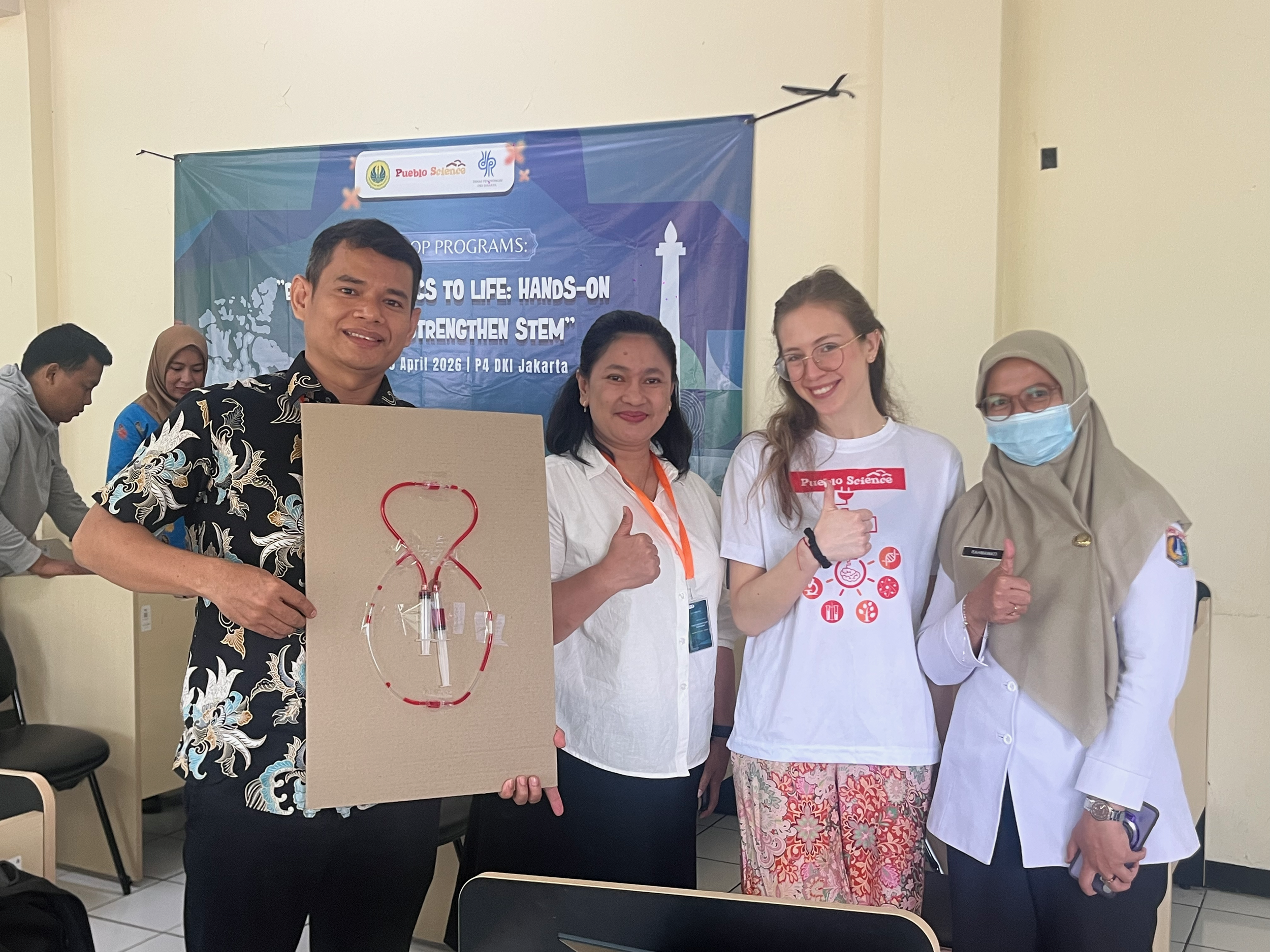
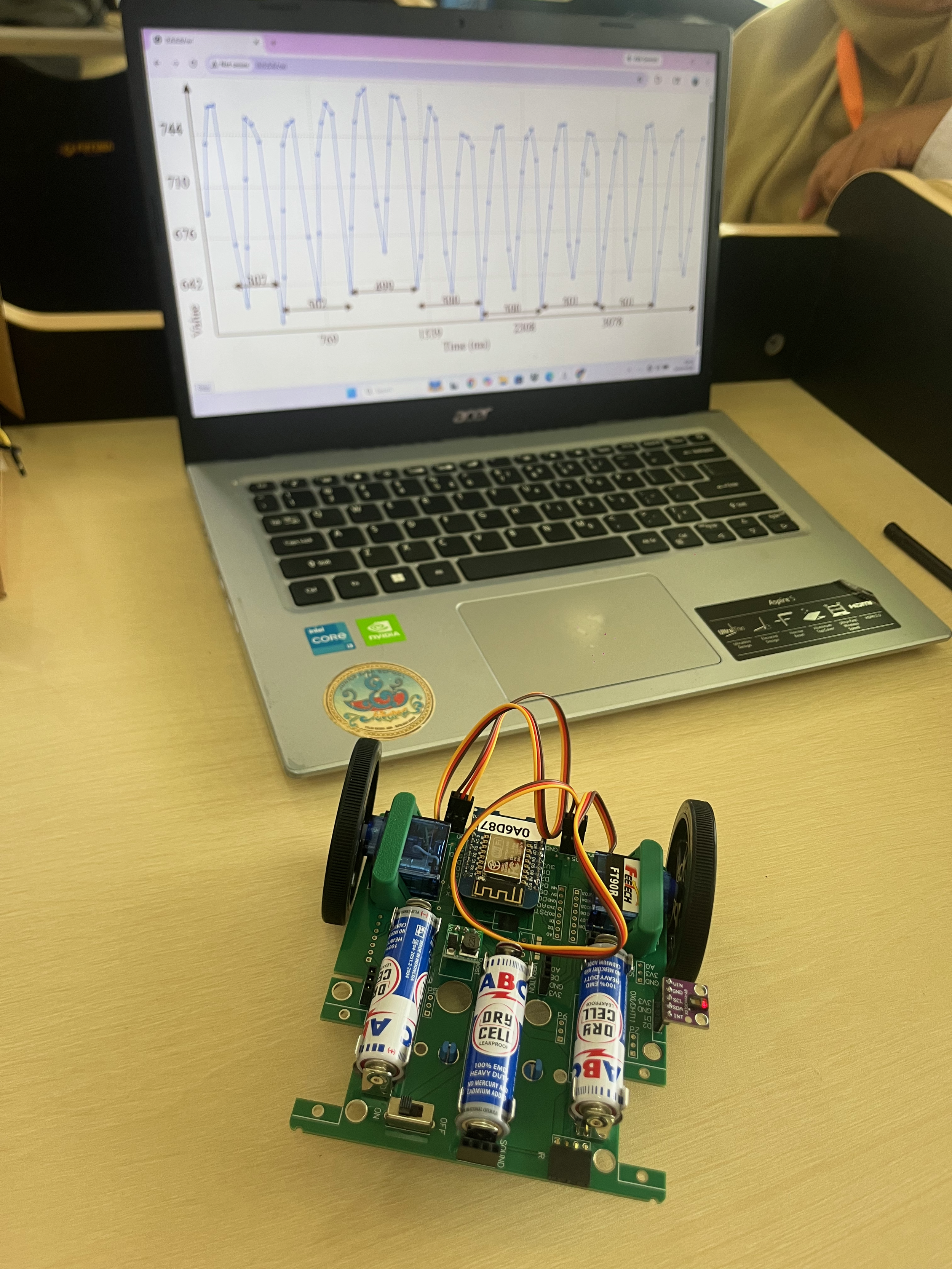
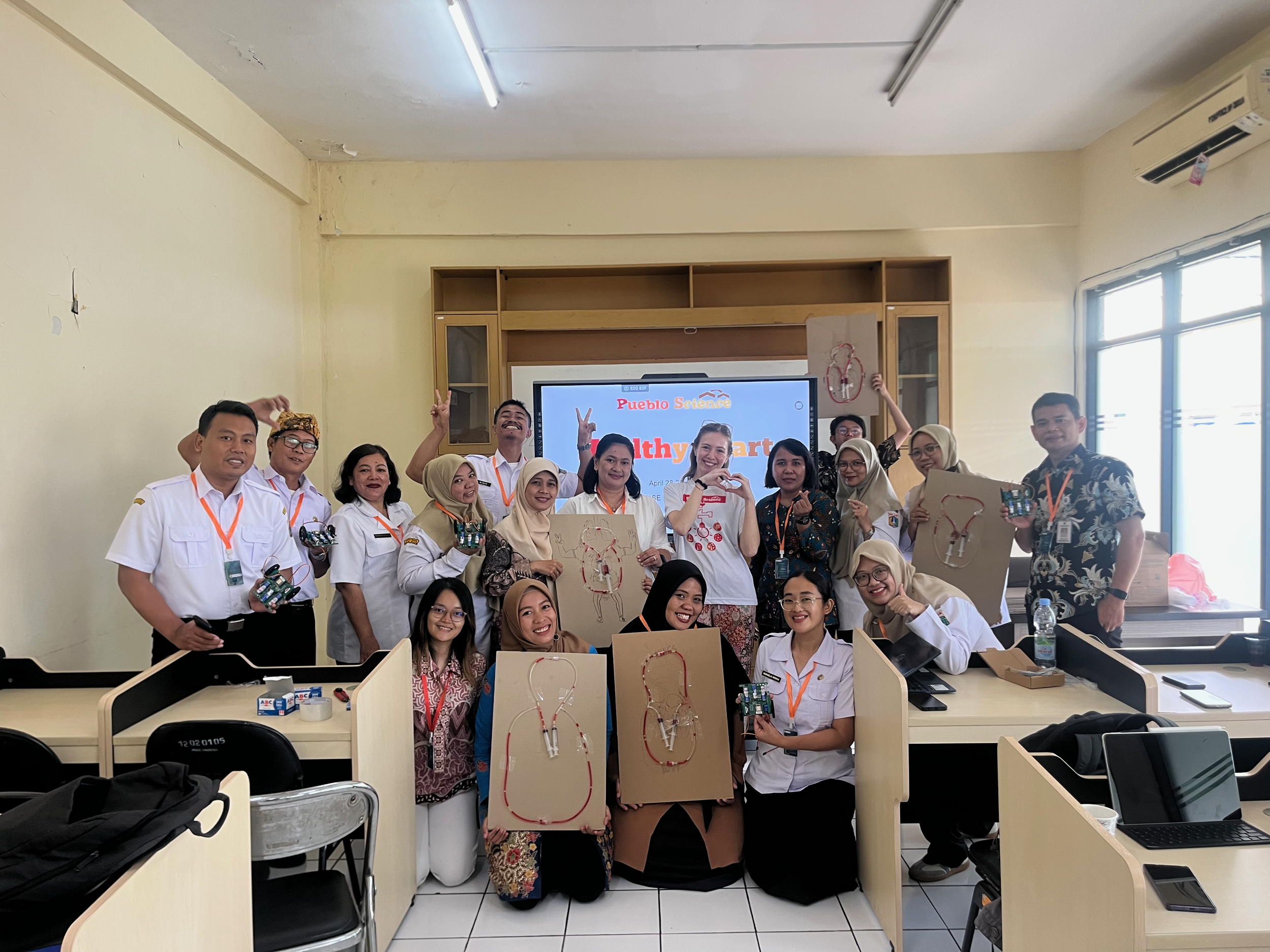
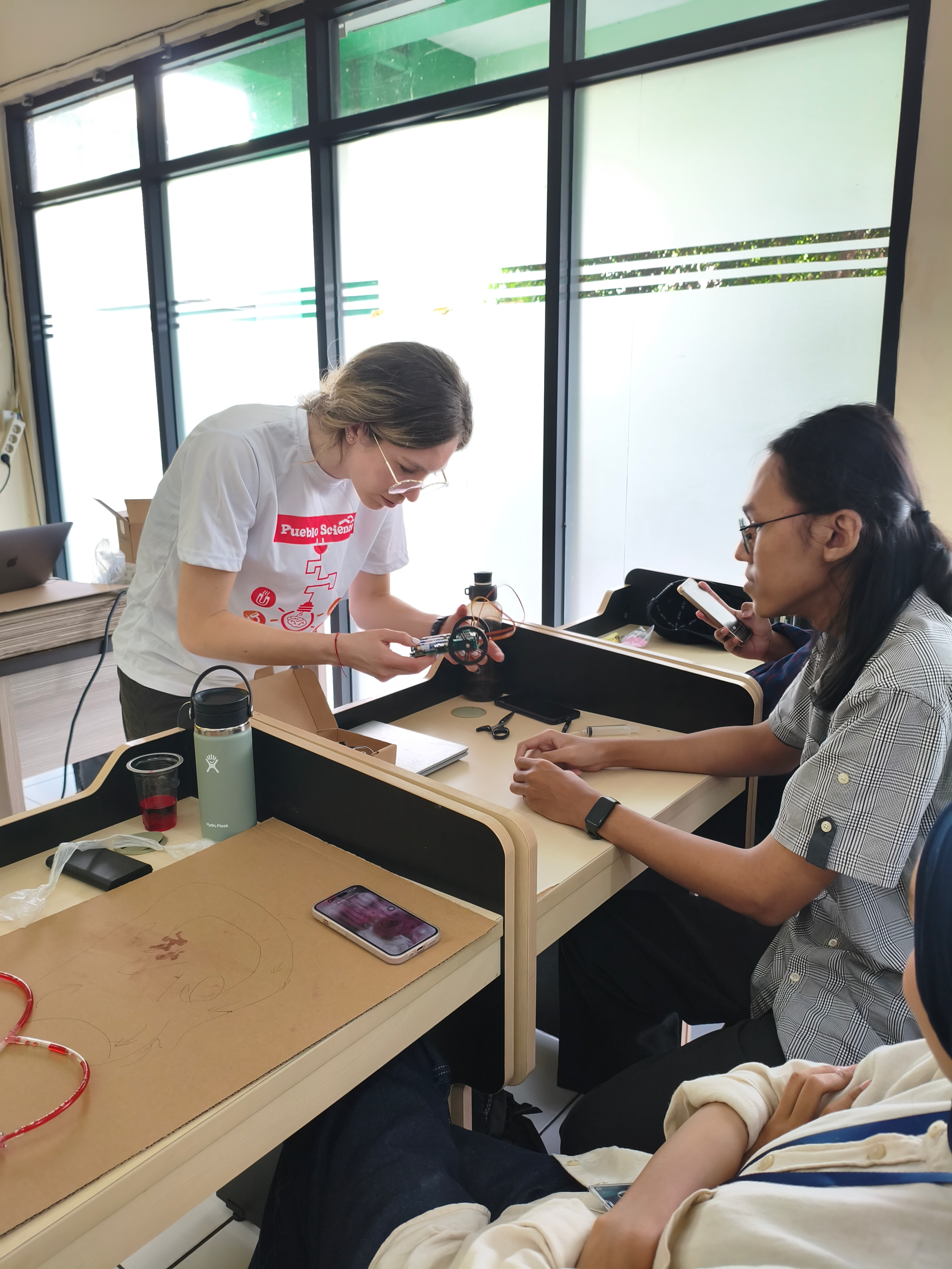
As part of the RISE program, our Pueblo Science team partnered with Universitas Negeri Jakarta (UNJ) to deliver STEM training to 50 grade school teachers from 35 schools as well as 70 university students. Together, we explored robotics and classroom science activities designed to be interactive, accessible, affordable, and adaptable for different learning outcomes. In my session, we learned about the cardiovascular system, activities to simulate the circulatory process, and how to use robotics for pulse measurements. Going into this experience, I was so excited to share my knowledge with educators who are shaping the next generation as well as current university students who will also become leaders. However, one of the most meaningful aspects of this experience was realizing how much I learned from them. Their creativity and willingness to learn reminded me that teaching is always a two-way exchange and experience.
As I continue my journey in mental healthcare research and education, I continue to learn valuable lessons from these experiences that I know will stay with me. I am incredibly grateful tothe Pueblo Science team and family, the educators, and the students who have welcomed me so warmly, and taught me so much. Their enthusiasm and commitment to learning fuels our work. I look forward to continuing to support Pueblo Science and other initiatives that make science education accessible, engaging, and empowering for communities around the world!
About the Author:
Valentina Tamayo Velasquez is a Colombian-born and Toronto-raised student and Pueblo Science volunteer. She completed her undergraduate degree with a major in Neuroscience, a minor in Psychology, and a minor in French Studies. is currently completing a PhD at the Institute of Medical Science, University of Toronto where she is exploring the implementation of a machine learning-based tool in mental health and psychiatry to improve patient safety and outcomes.