From STEM Workshops to Sea Turtles: A Pueblo Science Journey to Maratua
During our 2025 outreach trip to Banjarmasin, one of our local hosts told us about an island paradise off the coast of East Kalimantan called the Derawan Islands, famous for its crystal-clear waters and spectacular marine life.
Intrigued, our team started digging a little deeper and discovered that neighboring Maratua Island held even more hidden gems.
After wrapping up our teacher training programs in Jakarta, in April 2026, four Pueblo Science volunteers boarded a flight to Kalimarau Airport with a loosely sketched plan: arrive on the coast of East Kalimantan and figure out a way to Maratua.
What followed was an unexpectedly complex—but ultimately unforgettable—lesson in flexibility, teamwork, and adventure.
Navigating the Unknown
Information in English about the archipelago was limited. We had no clear details about boat schedules, changing weather conditions, or even which departure port was most reliable. None of our contacts across Indonesia could give us a definitive itinerary.
When we arrived, the airport's tourist information desk was empty, and the language barrier quickly became apparent.
So we did what we often do during our STEM outreach work: we started solving the problem with the information and resources we had.
From the airport terminal, we contacted local Airbnb hosts directly. One responded just in time, advising us to travel to the riverside town of Tanjung Redeb and catch a public speedboat to Maratua the following morning.
With help from airport staff, we confirmed the route and spent the night in Tanjung Redeb.
The next morning, however, our plan fell apart.
We arrived at the dock to find the regular boat full.
Just as we began considering a longer and more expensive route through Tanjung Batu, an English-speaking tourist information officer helped us explore our options. Then, unexpectedly, the boat captain announced that four passengers had cancelled.
Four seats had opened up.
We had only minutes to decide.
We grabbed our gear, climbed aboard, and 15 minutes later were speeding toward Maratua.
Arrival in Paradise
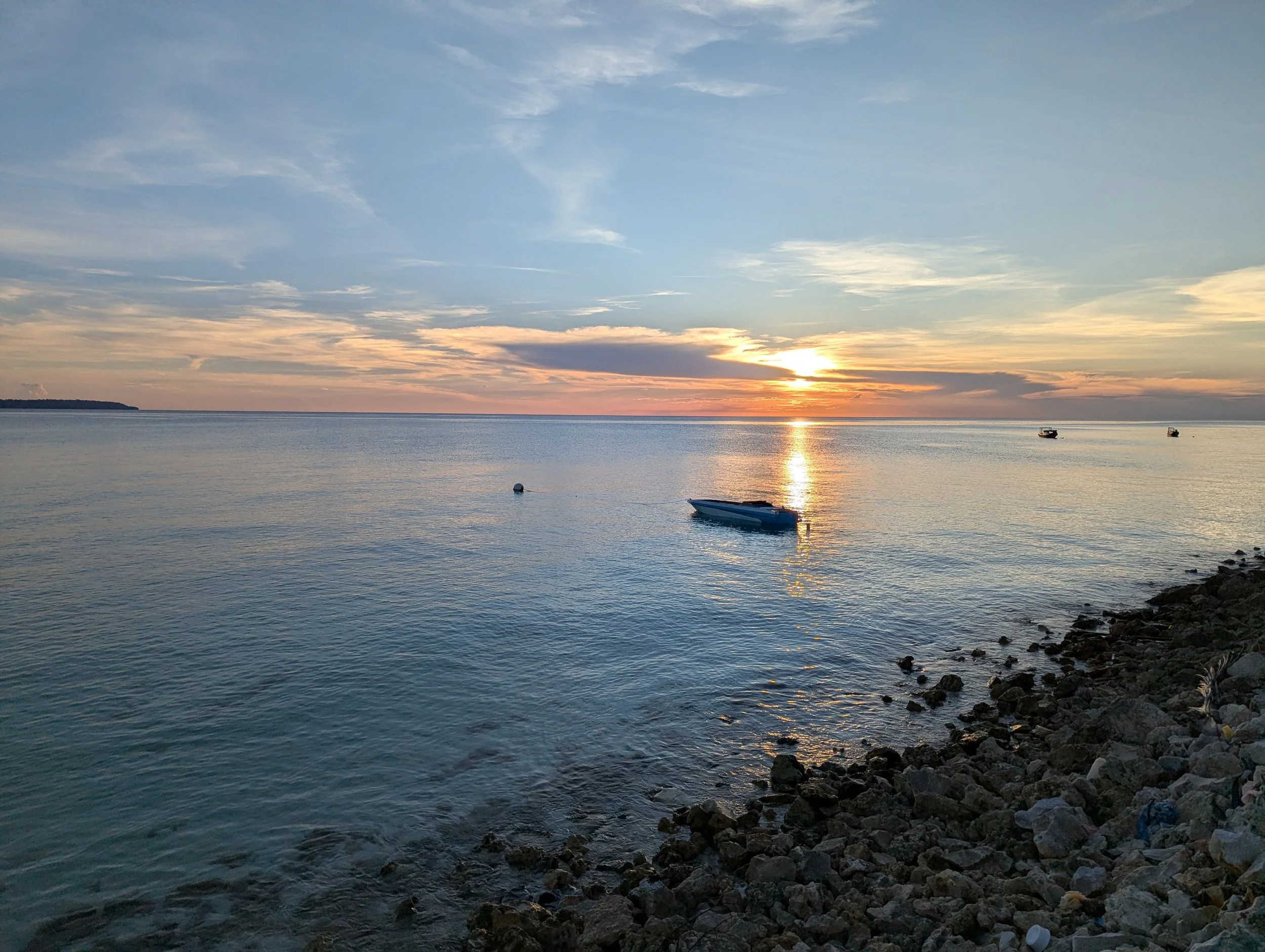
Every ounce of travel stress vanished the moment Maratua appeared on the horizon.
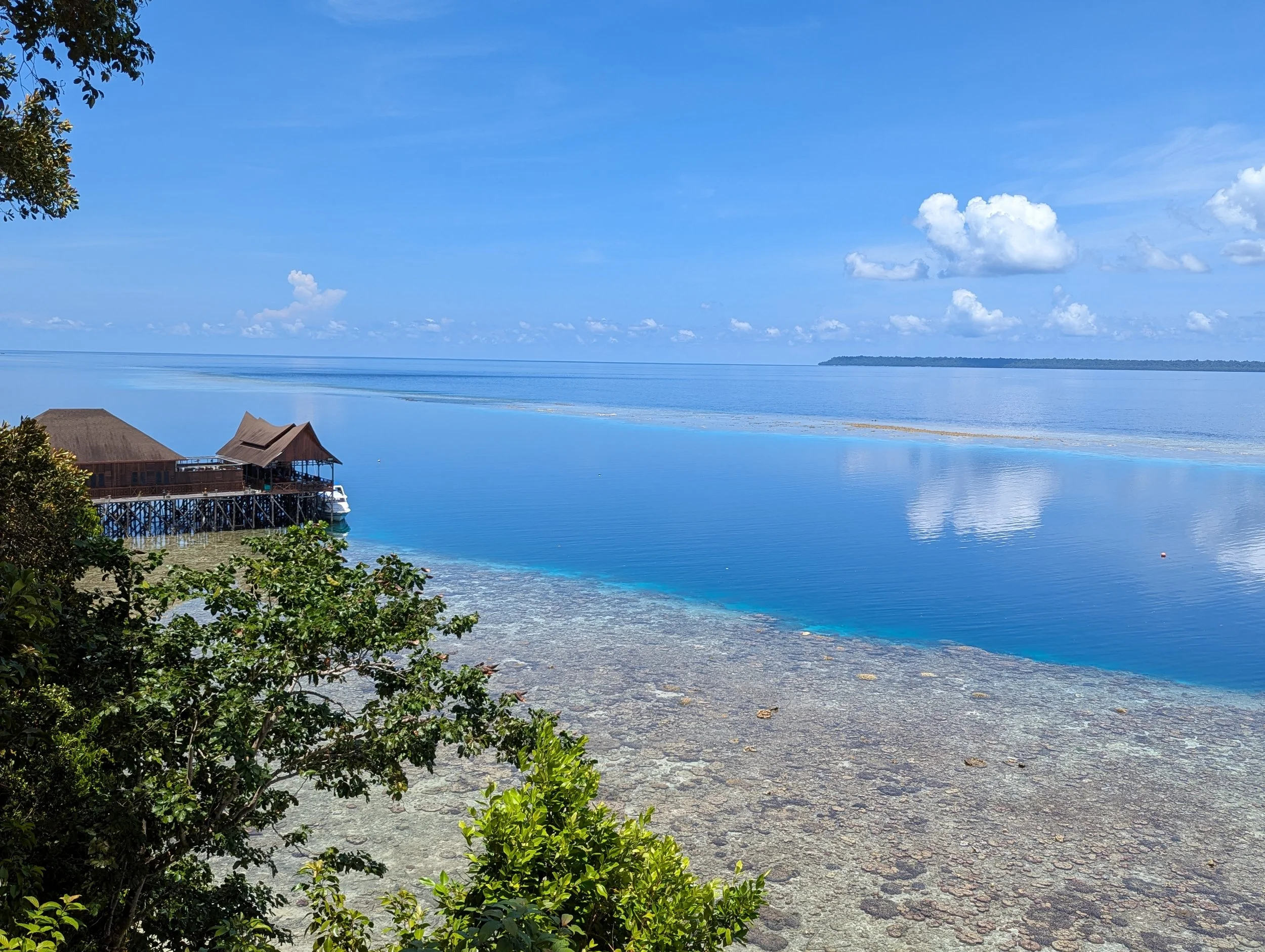
The island welcomed us with transparent turquoise water, vibrant coral gardens visible from above, and an immediate sense of peace.
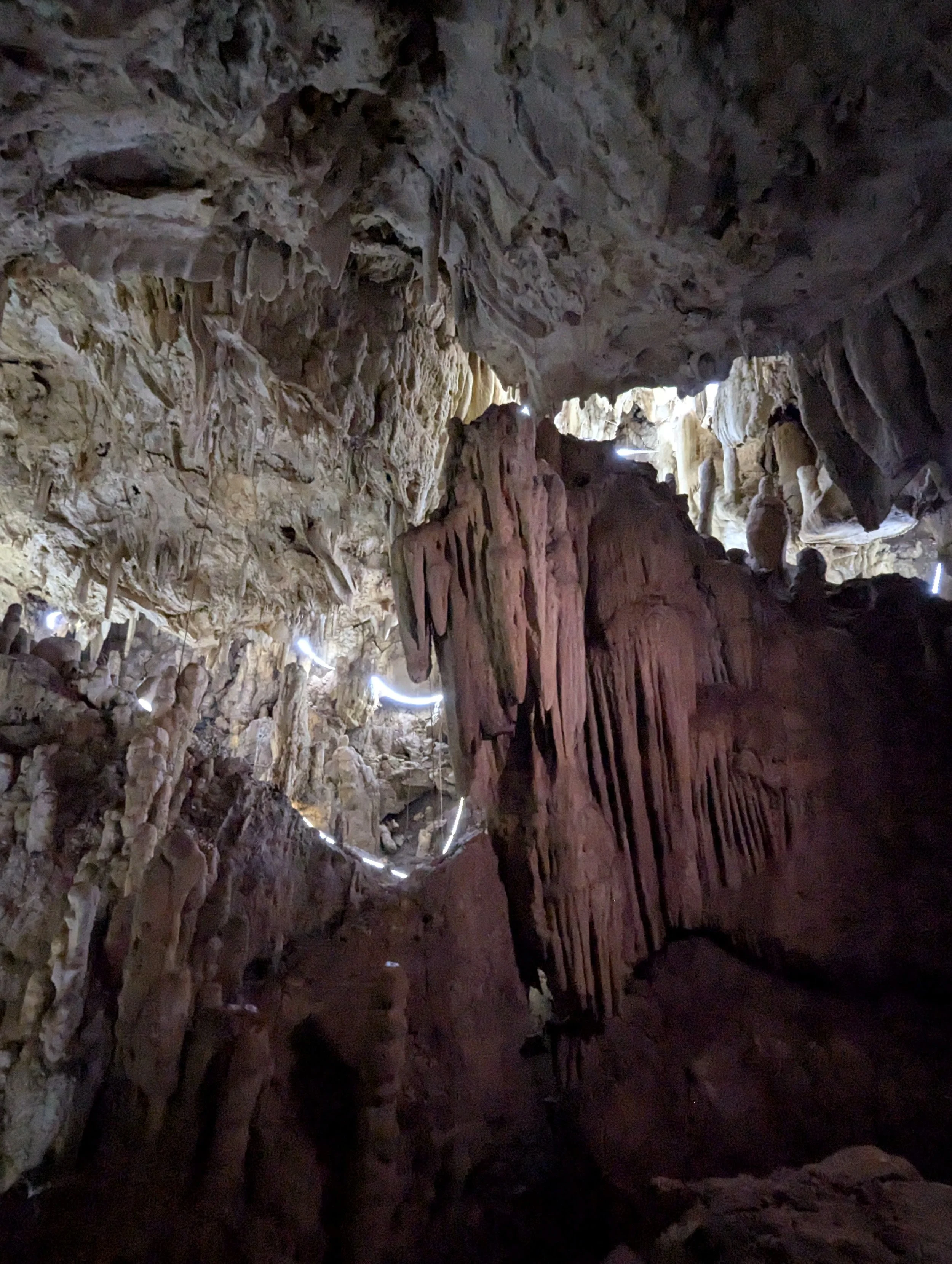
Our host met us at the jetty, helped with our luggage, and had scooters and snorkeling gear ready within minutes. He even gave us a hand-drawn map highlighting sea caves, viewpoints, and secluded swimming areas.
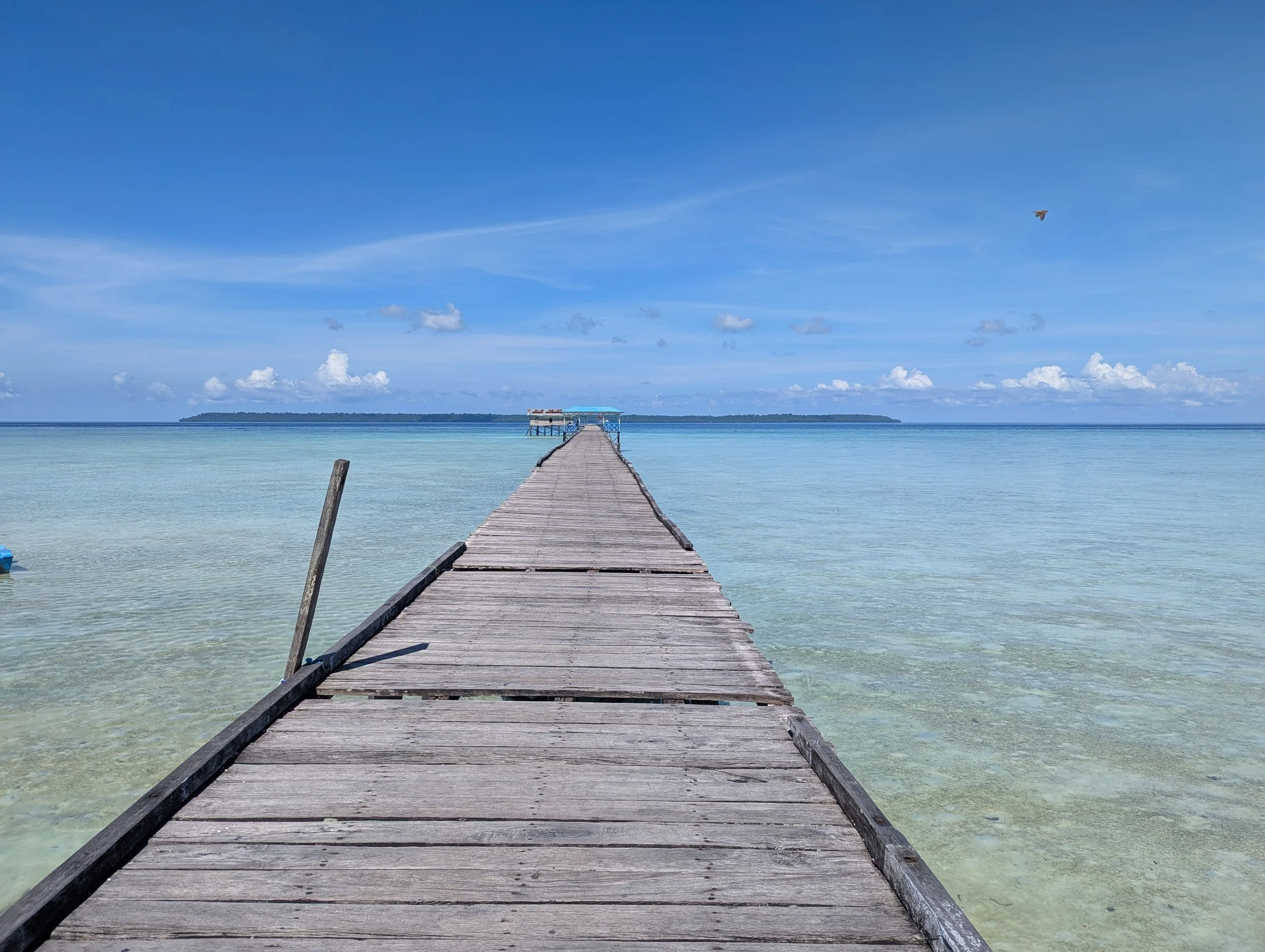
The undisputed highlight was the local "turtle highway"—a long, pier-like structure extending over a shallow reef shelf.
At low tide, dozens of massive green sea turtles gathered just beneath the surface to feed.
Floating alongside them in the open ocean for hours became a core memory for our entire team.
The island's ecosystem felt remarkably wild and well-preserved. Colorful reef fish swarmed around the docks, giant monitor lizards crossed the pathways, and wild monkeys moved through the canopy overhead.
Local fishers also treated us to fresh grilled fish with rice—an incredible feast for four people that cost just 100,000 IDR, or less than $10 CAD in total.
We later learned that Maratua receives fewer than 20,000 visitors per year. Compared with the millions of tourists who visit Bali each year, it offered us a rare glimpse of a very different side of Indonesia.
Racing the Tides
Our time on Maratua was limited to just 24 hours because of the island's ferry schedules.
But once again, a little flexibility opened up a new possibility.
During a casual dinner conversation, a local restaurant owner helped us arrange a different return route through Tanjung Batu. The new plan gave us an extra four hours the following morning to snorkel and explore the reefs.
Then came the return journey.
A smaller speedboat carried us across the open Celebes Sea, where one-metre swells kept everyone alert. In the middle of the rough crossing, a pod of wild dolphins suddenly appeared, leaping alongside our boat.
For a few minutes, everyone forgot about the waves.
A challenging commute had turned into one of the most magical moments of the trip.
From Tanjung Batu, we packed into a local van for the journey back to Tanjung Redeb, rested for the night, and flew to Banjarmasin.
The next day, we were back to STEM workshops.
What Adventure Has to Do with STEM
At first glance, a remote island adventure might seem completely separate from our work in STEM education.
In reality, the same qualities that helped us navigate our journey—curiosity, adaptability, teamwork, communication, and problem-solving—are the qualities we try to cultivate through our programs.
Our volunteers experience this firsthand.
When you're teaching robotics in a classroom where resources are limited, you learn to adapt.
When you're working with teachers who have different levels of technical experience, you learn to listen and communicate.
When a planned activity doesn't work as expected, you learn to troubleshoot.
And when your boat is unexpectedly full, you learn to find another solution.
The journey to Maratua reminded us that some of the most valuable learning happens when things don't go according to plan.
Why Volunteer with Pueblo Science?
This is what makes volunteering with Pueblo Science unique.
Our international programs aren't simply about traveling somewhere new to deliver a workshop. They're about becoming part of a community, working alongside local educators, learning from new environments, and finding creative solutions to real challenges.
You might spend the morning helping a teacher introduce robotics to their students and the afternoon exploring a new community. You might develop curriculum one day and find yourself navigating an unfamiliar transportation system the next.
Every experience is different.
But throughout it all, you are part of a team working toward a common goal: making meaningful, hands-on STEM education more accessible.
And sometimes, when the work is done, there's an opportunity to explore a little further.
For our team, that meant Maratua—sea turtles, coral reefs, caves, wild dolphins, and memories that we'll carry long after returning home.
Ready for Your Next Adventure?
If you're a scientist, educator, engineer, or a mature student looking for a volunteer experience that combines global impact, hands-on education, cultural immersion, teamwork, and adventure, Pueblo Science could be the place for you.
Bring your expertise. Bring your curiosity. Bring your willingness to adapt.
We'll take it from there.
Your next adventure might begin in a classroom—and lead somewhere you never expected.