
The Ripple Effect: Bridging STEM and Health Literacy
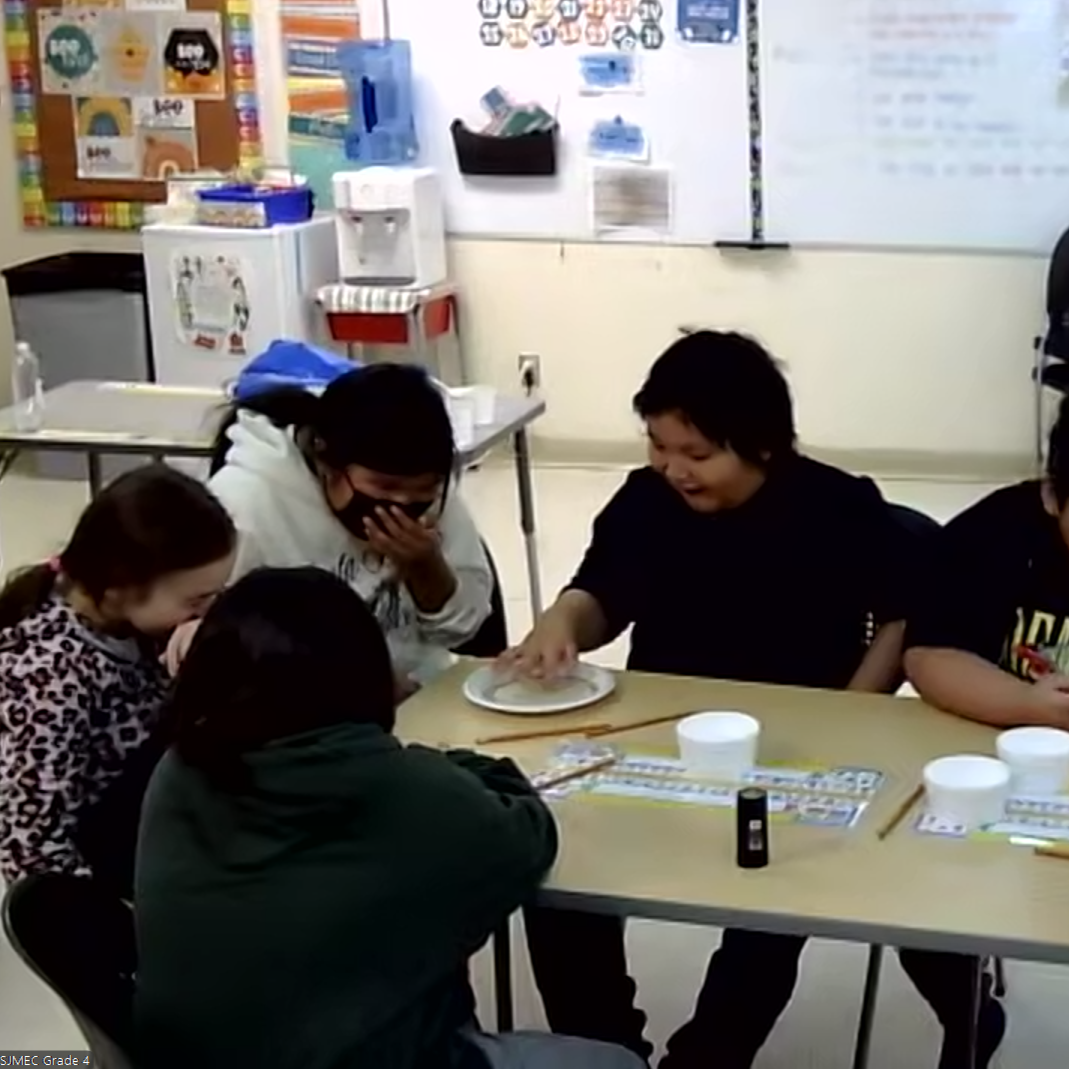
The classroom filled with laughter as pepper scattered across the water. In a Grade 4 classroom in Webequie First Nation, eyes widened as a student dipped a soap-coated finger into a bowl. In an instant, the pepper “ran away.” For these students, a simple experiment transformed the abstract idea of germs into something visible, surprising, and unforgettable.
A Vision for Long-Term Health Literacy
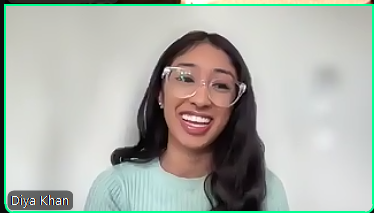
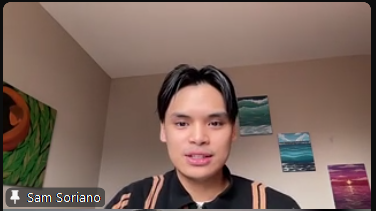
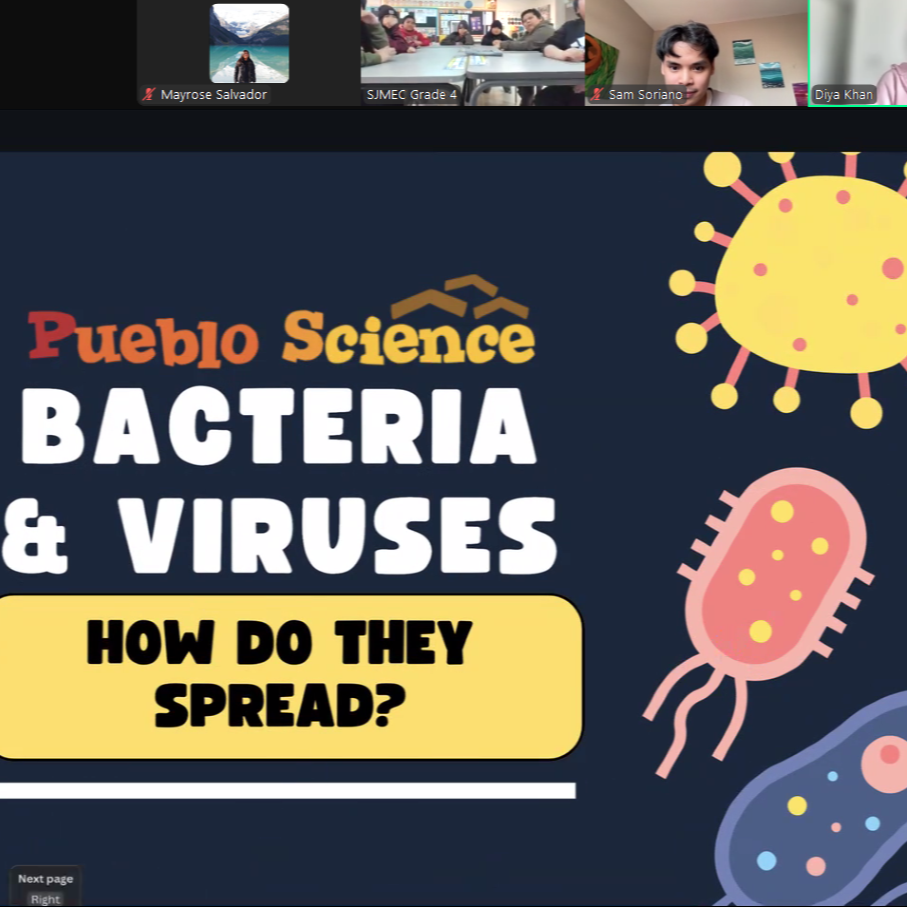
This moment was the result of a deliberate collaboration that began a year earlier. In 2024, Pueblo Science welcomed two fourth-year student interns from the University of Toronto’s Human Biology course—Sam Soriano and Diya Khan. Their mission was to design engaging, curriculum-aligned online science lessons for students in First Nation communities across Northwest Ontario.
While Sam and Diya developed multiple lessons aligned with Ontario curriculum expectations, they also wanted to go further. In January 2025, they set out to strengthen vaccine and health literacy through STEM education. Their long-term vision was to create a progressive “health pathway,” with at least one age-appropriate lesson per grade, so that by Grade 8, students would have a strong understanding of immunology, disease prevention, and public health.
From Glitter to Habits: The Lesson in Action
The Grade 4 lesson, aligned with the Community and Habitat strand of the Ontario Curriculum, used two high-impact activities to explore hygiene and prevention.
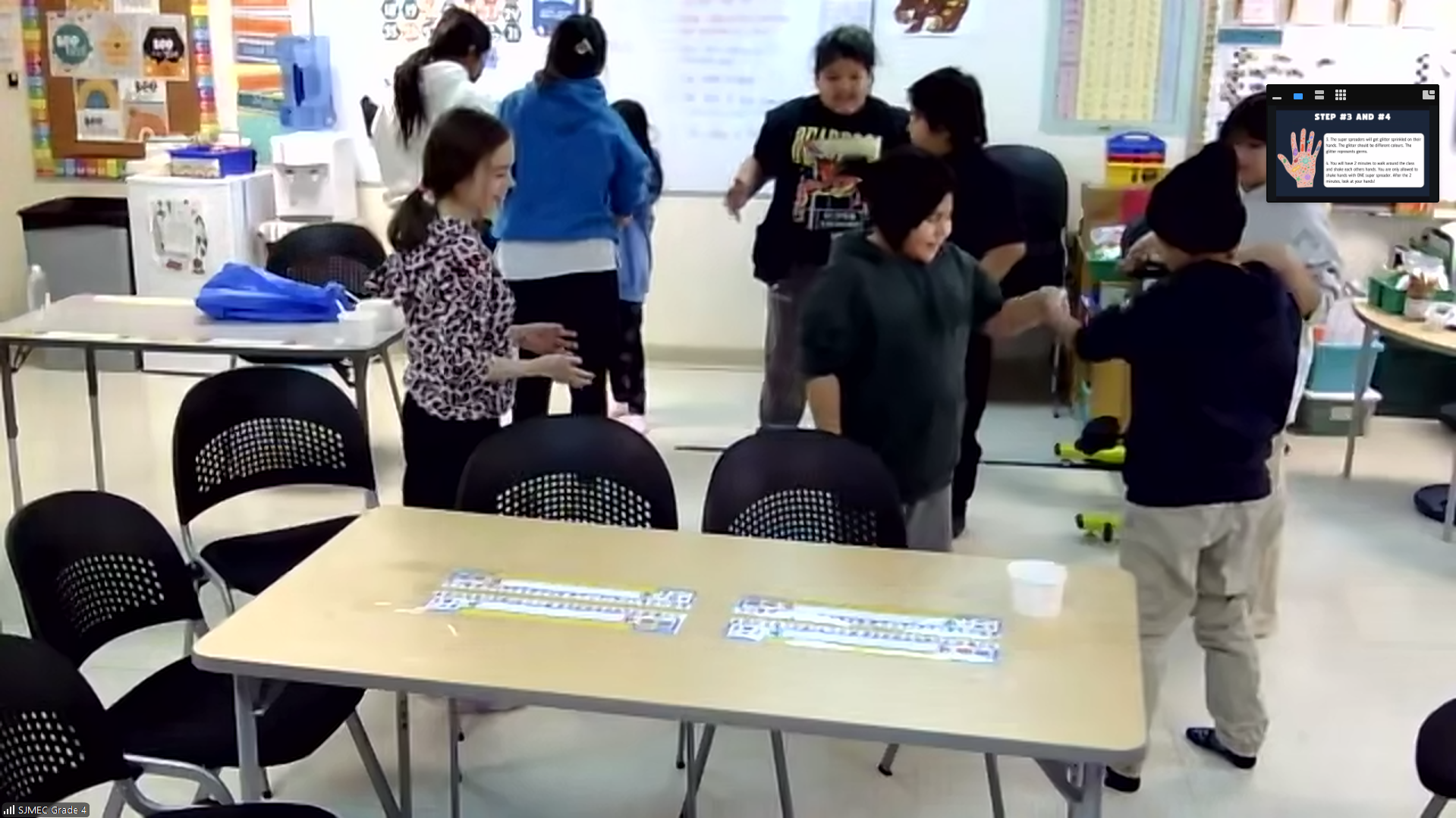
The Glitter Handshake simulated how easily germs spread. Two student (superspreaders) coated their hands with oil and glitter, then shook hands with classmates. When they attempted to wash the “germs” away—some using only water and others using soap—they quickly saw the difference. Soap, they discovered, breaks down the sticky bond that allows viruses and bacteria to cling to surfaces.
The Runaway Pepper experiment followed. Pepper sprinkled on the surface of water appeared harmless until soap was introduced. As the soap broke the surface tension, the pepper scattered instantly. The visual effect was striking, offering a powerful metaphor for how soap disrupts the protective layers of germs.
Deepening the Impact
The true success of the lesson wasn’t just in the experiments—it was in what came next. When the instructor asked if anyone had questions, one student raised their hand and said the activities were “very cool.” Then they added something even more meaningful: “From now on, I’m going to wash my hands thoroughly with soap.”
Moments like these remind us why hands-on STEM education matters. When science is fun, interactive, and relatable, learning becomes deeper and more lasting. By connecting STEM education to real-world health outcomes, we aren’t just teaching curriculum—we’re helping students build habits that protect themselves, their families, and their communities for a lifetime.