
From STEM Outreach to Youth Leadership: Empowering Students in Remote Communities
When Pueblo Science was founded, we were thinking about the remote communities we came from—Dr. Cynthia Goh from Puerto Princesa, Palawan, and Dr. Mayrose Salvador from Vintar, Ilocos Norte.
We knew firsthand that where a student grows up can shape the opportunities they have to explore science, technology, engineering, and mathematics (STEM).
Since then, Pueblo Science programs have expanded to communities across the Philippines, including isolated islands and schools in hard-to-reach mountain and coastal areas.
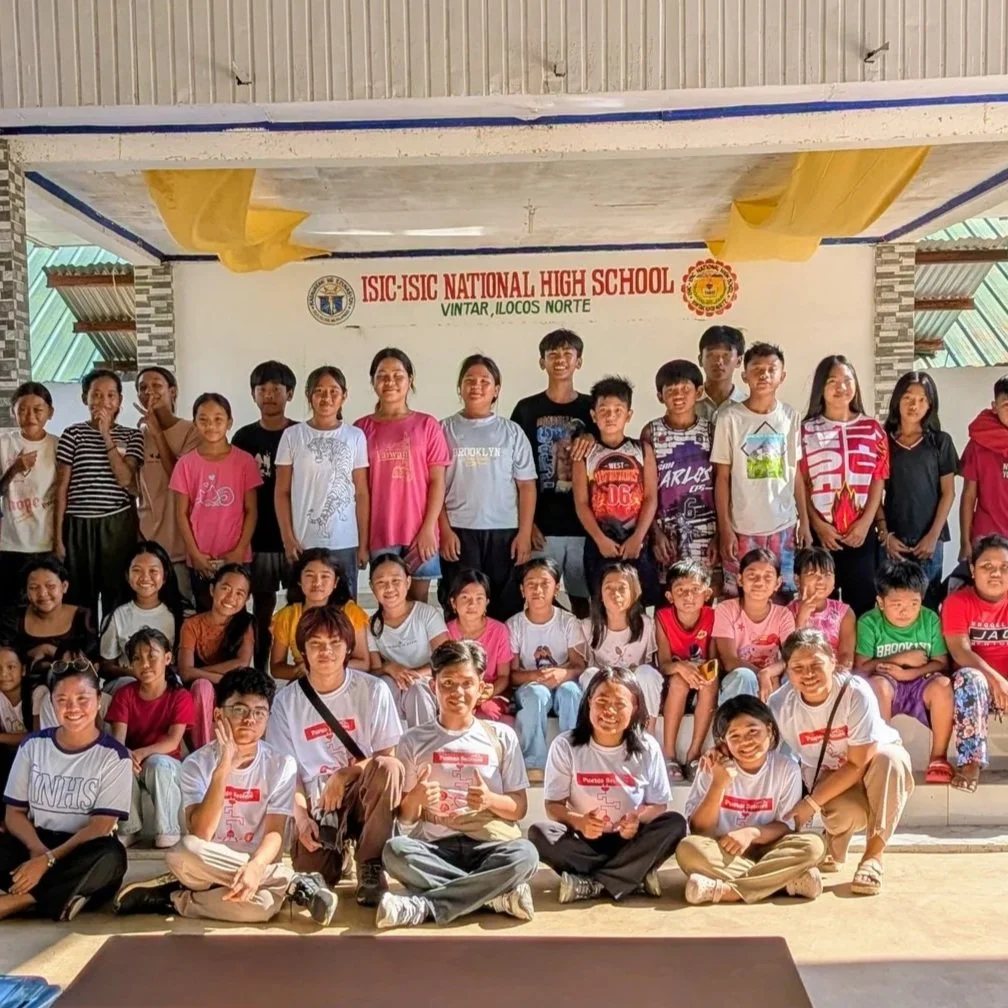
This year, we returned to Isic Isic, a remote village more than 1.5 hours from Laoag City.
But this time, we brought more than a robotics workshop.
We brought young people into the delivery team.
From Participants to Facilitators
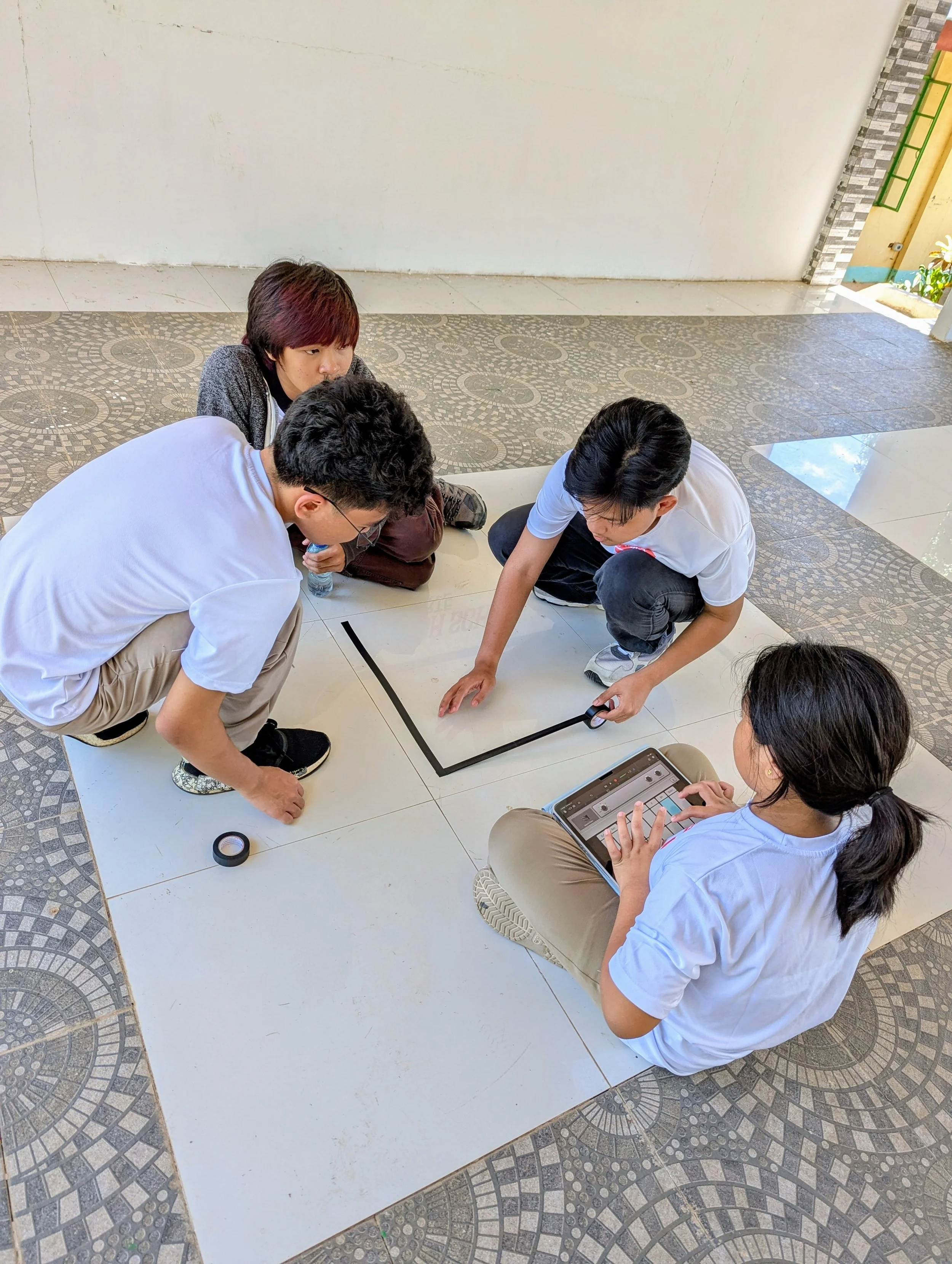
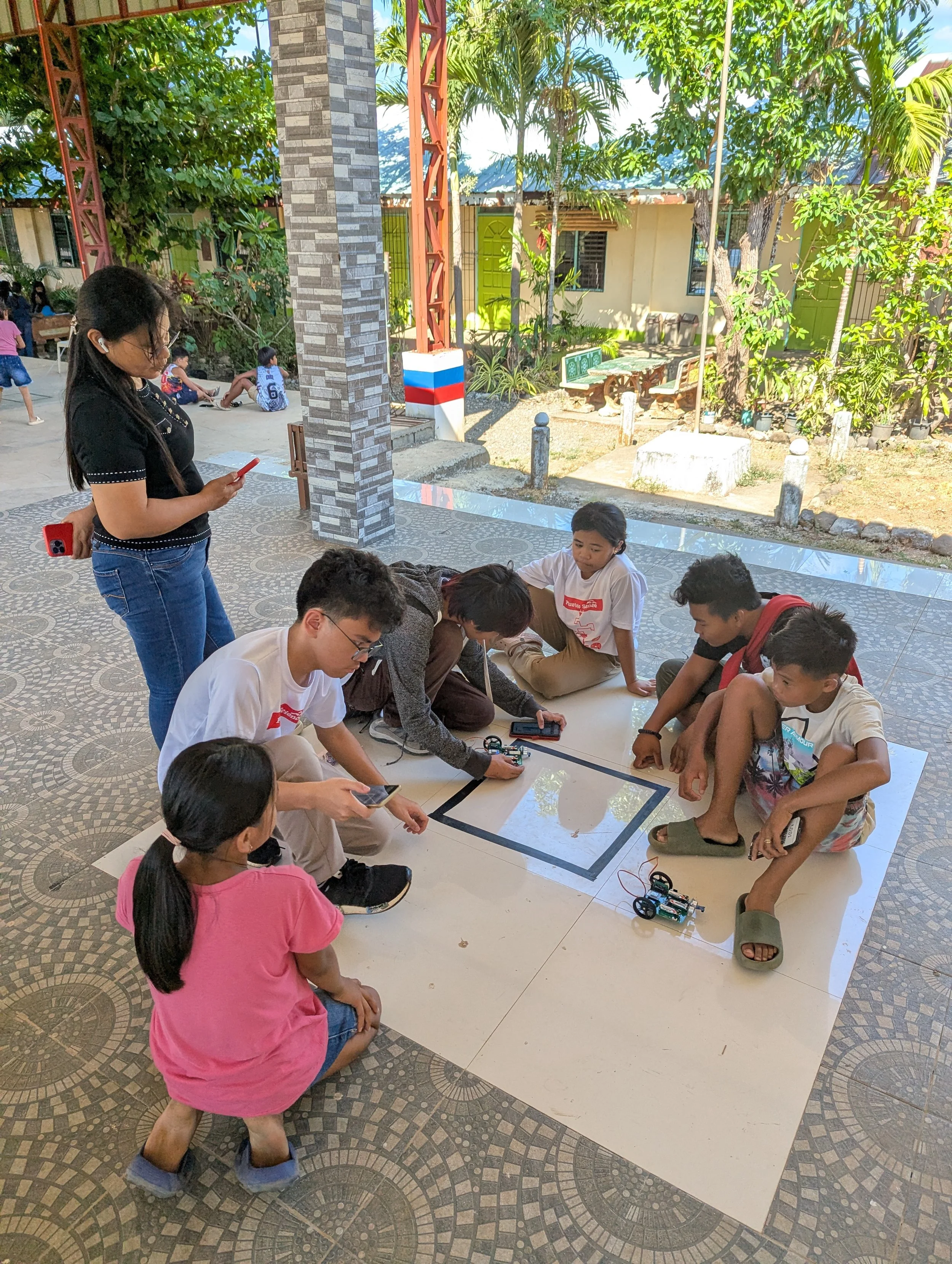
To help deliver a robotics workshop for 60 students in Isic Isic, we trained three high school students and one Grade 5 student in advance.
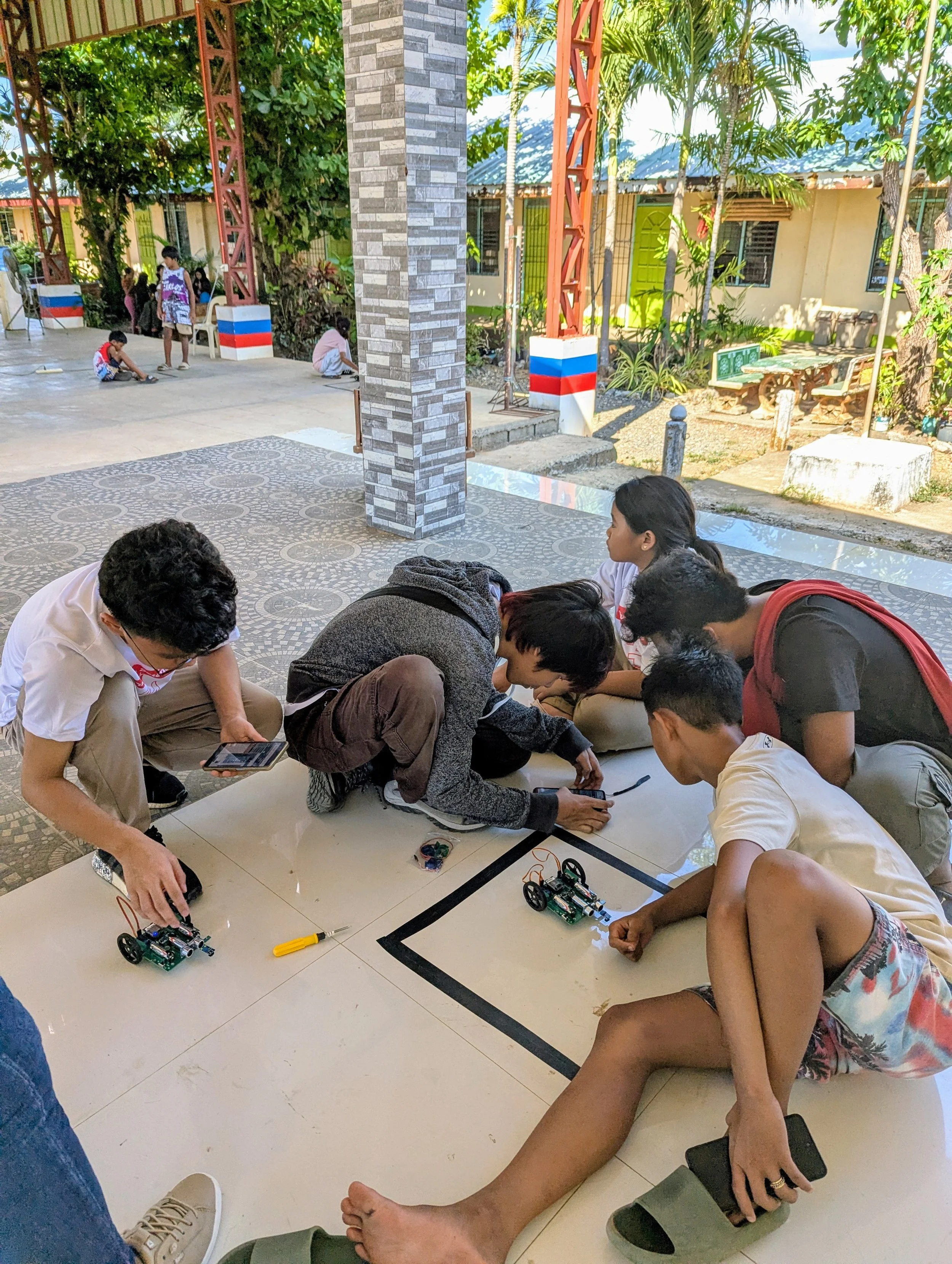
During a half-day training session, they learned how to assemble and program the robotics kits, troubleshoot common problems, and support other students.
The following morning, they joined our team to help deliver the workshop.
For us, this represents an important shift in how we think about STEM outreach.
Local students are not only participants. They can become facilitators, mentors, and future STEM leaders in their own communities.
The students we worked with were experiencing robotics for the first time, but their enthusiasm was immediate.
Learning Through Exploration
One activity challenged students to program a soil-moisture sensor and water pump. They then had to investigate which plants around the school had the wettest soil.
As soon as the challenge was announced, students ran in different directions, examining plants and comparing what they found. They encouraged one another and turned the school grounds into a hands-on laboratory.
In another activity, students learned how to measure their pulse before and after physical activity.
One of our youth volunteers led the group in a dance activity, transforming a lesson about heart rate into an energetic—and very entertaining—experiment.
These moments are at the heart of hands-on STEM learning.
Students aren't simply told how something works. They build, test, observe, troubleshoot, and discover.
And when learning becomes an experience, concepts that might seem abstract in a classroom can suddenly become real.
STEM Education in the Real World
Our work in remote communities also reminds us that access to technology cannot be taken for granted.
While waiting for students to arrive in Isic Isic, our volunteers experienced the local internet infrastructure firsthand. The community uses a Piso WiFi system, where one peso provides approximately 10 minutes of internet access.
With only a few people online, the connection was manageable. But teachers told us that when the entire school connects, the network becomes extremely slow.
Some students also did not have their own smartphones or devices to use during the robotics activities.
So we adapted.
Students with devices worked alongside those without, and our team brought additional devices to ensure everyone could participate.
These experiences reinforce an important principle in our work:
Accessible STEM education cannot depend entirely on reliable internet, one-to-one devices, or infrastructure that may not exist in every community.
Programs need to be designed around the realities of the communities they serve.
Building Local Capacity
Bringing robotics to a remote community is meaningful.
But training young people from that community to help teach robotics creates another kind of opportunity.
The four youth facilitators in Isic Isic were able to move from being learners to helping others learn. They gained experience not only with robotics and programming, but also with communication, problem-solving, troubleshooting, and mentoring.
That experience can have an impact beyond a single workshop.
A student who learns to facilitate a robotics activity today may become the person who introduces a younger student to programming tomorrow.
A teacher who gains confidence using new technology can bring that knowledge back to the classroom.
And a community that once depended on an outside team to deliver a STEM program can gradually develop the capacity to create and support its own learning opportunities.
This is the direction we want to continue moving toward.
From Reaching Communities to Empowering Communities
When Pueblo Science first began working in remote communities, our goal was straightforward: bring STEM opportunities to students who had limited access to them.
We still believe strongly in that mission.
But our experience has shown us that reaching students is only the beginning.
Long-term impact also means building local capacity—training teachers, engaging youth leaders, strengthening partnerships, and creating resources that communities can continue using after our team leaves.
The goal is not simply to reach more students.
It is to help create communities where more people have the confidence, skills, and resources to bring STEM learning to others.
That is what we saw beginning in Isic Isic this year.
Four young people who started as learners stepped forward to help others learn.
And that may be one of the most important lessons of all:
The most sustainable way to expand access to STEM may be to empower the people who already call these communities home.
2026 Impact at a Glance
100 students reached in the Philippines
20 local youth facilitators trained in Isic Isic
5 remote communities reached
400+ teachers trained through our RISE program
4 local partners engaged
“For the two days I’ve spent in the most remote barangay of my town. I got to experience teaching students younger than me about robotics. It felt good teaching the students about the amazing world of robotics and helping them create and troubleshoot their robots. This opportunity to teach really helped me better understand the concepts of robotics that I had learned a year ago. The experience will truly serve as one of the stepping stones that will help me achieve my future goals in life. I hope to become a planetary scientist one day!”
Our work continues to grow, but our vision remains rooted in the same idea that inspired Pueblo Science from the beginning: every student, regardless of where they live, should have the opportunity to discover the power of STEM.
We are grateful to Systems for Research for their continued support; their yearly sponsorship allows us to reach students in remote communities of Canada and around the world.